OTAR’s business case rests on three simultaneous value streams. Together, they frequently produce payback periods that compete favourably with conventional capital investment.
For most operators, the investment decision comes down to three questions: what are the value streams, what is the payback period, and what are the risks?
Value Stream 1: Reduced Treatment Costs
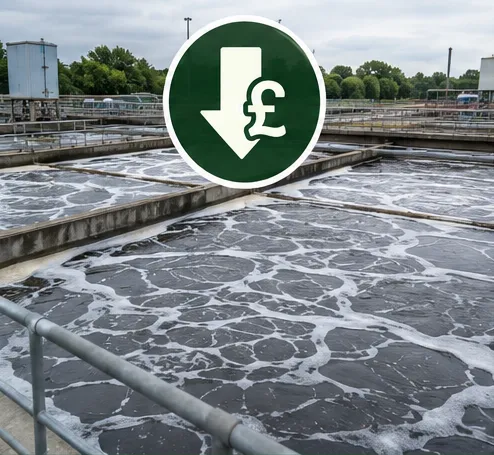
Every tonne of ammonia that OTAR recovers before it reaches the biological treatment system is a tonne the plant no longer needs to nitrify and denitrify. The energy saving from avoided aeration is typically 3–8 kWh per kg of nitrogen removed. At current UK industrial electricity prices (approximately £0.12–0.18/kWh), this generates a saving of £0.36–1.44 per kg N.
In practice, that’s £360–1,440 per tonne of nitrogen diverted from BNR. Associated savings in carbon dosing, alkalinity supplement and sludge disposal add further. For OTAR’s Variant 4 (heat recycling), the system’s COP exceeds 15. Therefore, the electrical energy needed to drive stripping is far smaller than the treatment cost it avoids.
Value Stream 2: Product Revenue
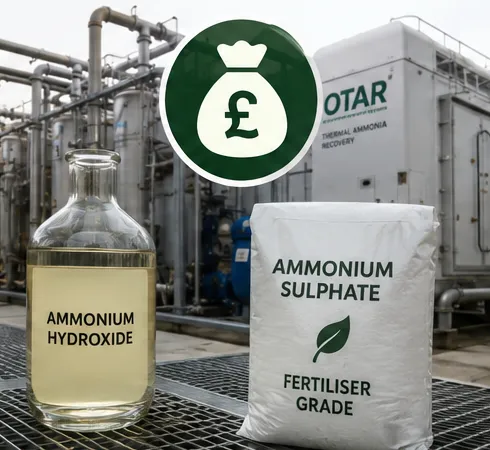
Recovered ammonium hydroxide (Variant 2) or ammonium sulphate (Variant 3) generates a direct revenue stream. For Variant 2, standard-grade ammonium hydroxide solution typically achieves £150–280 per tonne in established markets. OMRI-certified product commands a premium above this range.
For a system recovering 90 tonnes of nitrogen per year as ammonium hydroxide, net product revenue typically contributes £40,000–90,000 per annum. This depends on product grade and offtake terms. In some cases, the product even replaces purchased inputs within the same facility. For example, one chemical plant reduced ammonium hydroxide purchases by nearly a third, a directly measurable saving.
Value Stream 3: Capacity and Compliance Benefits
Diverting ammonia from the main treatment stream before it enters BNR frequently unlocks latent treatment capacity. As a result, facilities can accept higher loads or additional feedstocks without capital investment in new infrastructure.
In addition, OTAR’s physico-chemical process (unlike BNR) resists inhibitors, temperature fluctuations and biomass instability. Consequently, it delivers more reliable consent compliance, which matters most for facilities with tight discharge limits or sites in sensitive catchments under Nutrient Neutrality policy.
Indicative Payback: A Worked Example
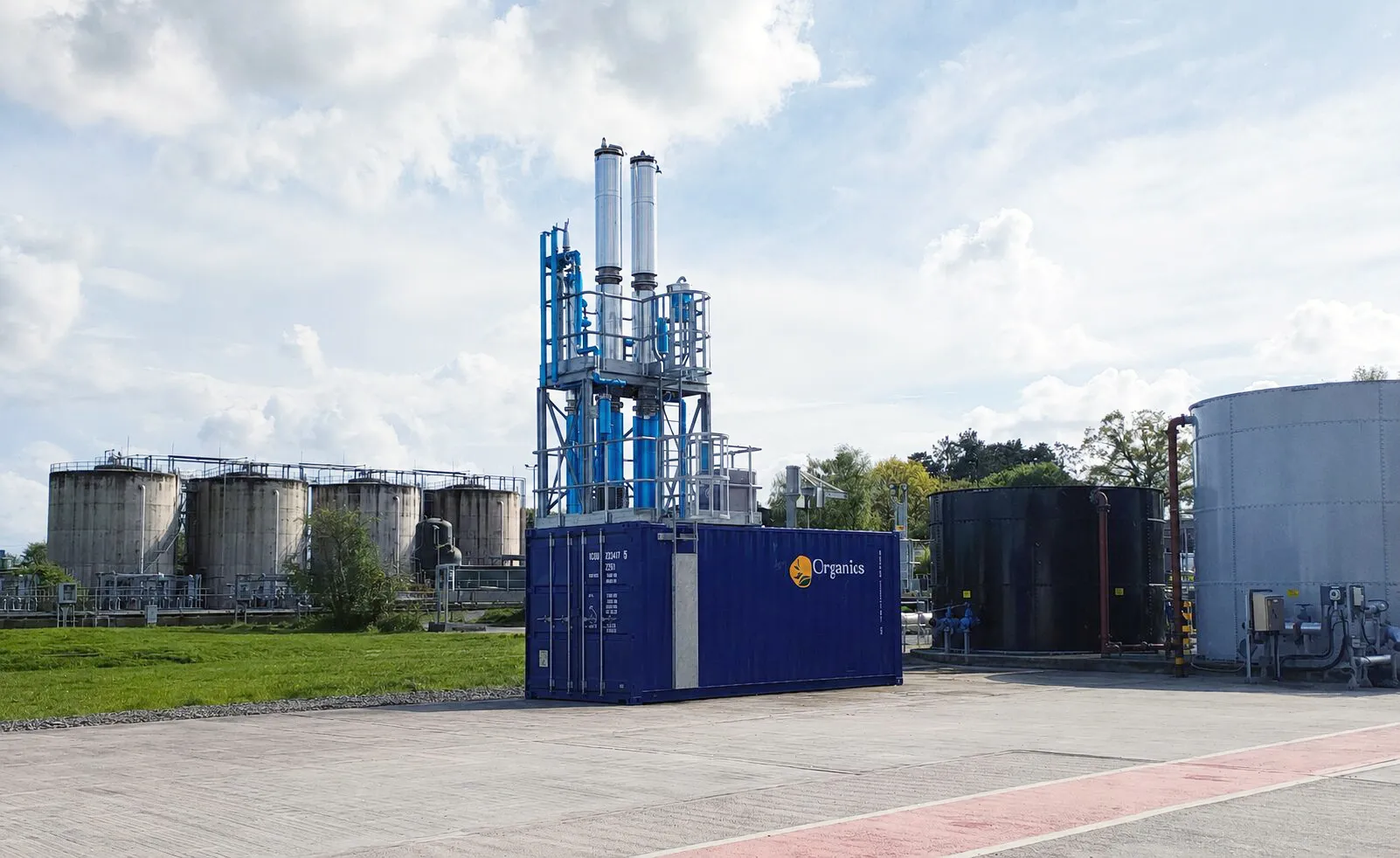
Site: AD plant, 30,000 tpa food waste.
Reject water: 20,000 m³/year at 3,200 mg/L TAN.
Recoverable nitrogen: 64 tonnes N/year.
OTAR configuration: Variant 2 (waste heat available from gas engine).
Indicative capital cost: £380,000–480,000.
Annual OTAR operating cost: £30,000–40,000.
Annual gross benefit (energy saving + ammonium hydroxide revenue + capacity value): £120,000–160,000.
Net annual benefit: £85,000–120,000.
Simple payback: 4–5 years.
These figures are indicative, since actual values depend on stream characteristics, waste heat availability, energy prices and product offtake terms. However, the Organics Group can provide a site-specific assessment..
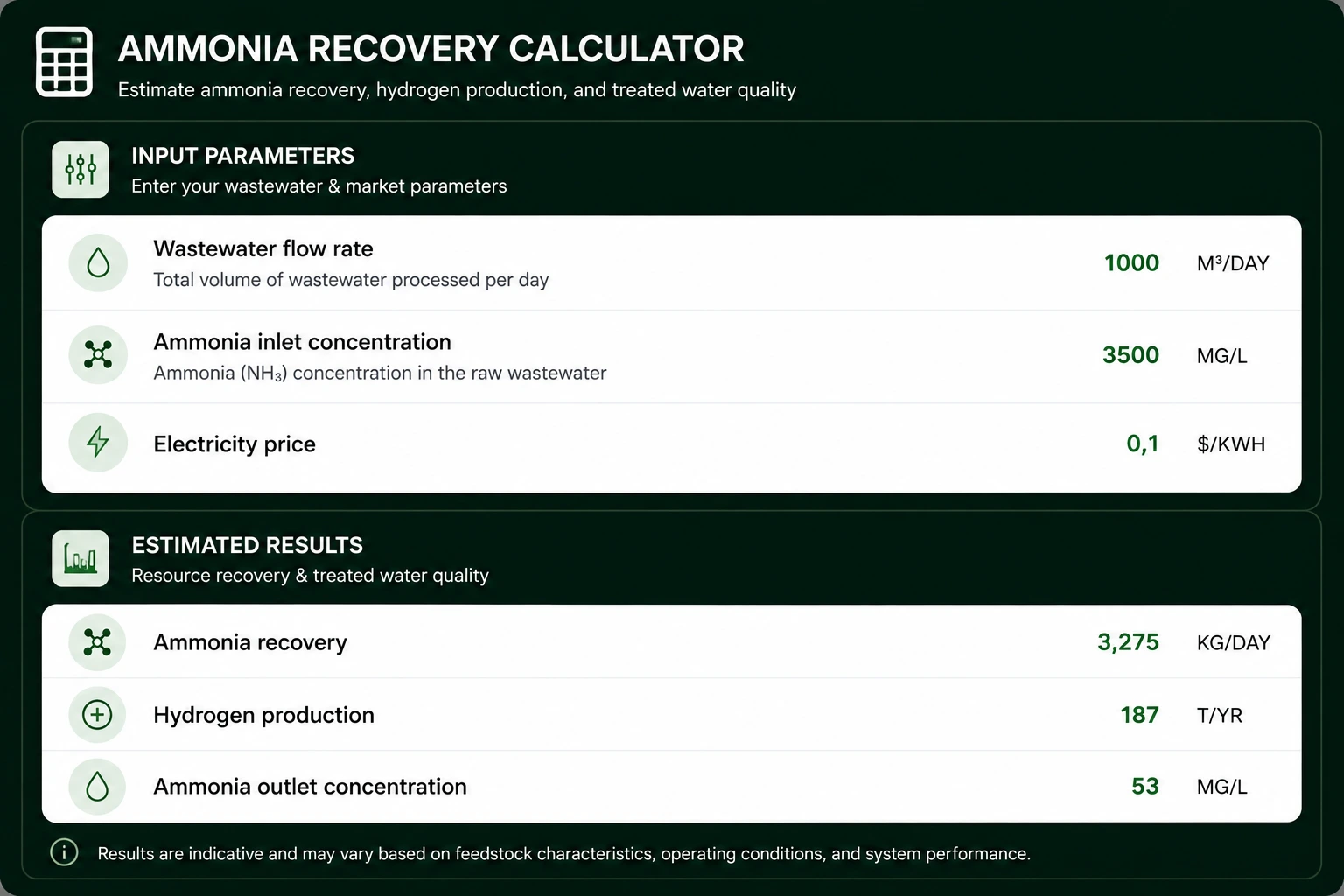
Estimate Your Own Payback
Evaluate the potential to recover ammonia and produce hydrogen while understanding the energy requirements and economics of your wastewater treatment process.
Free • Preliminary Estimate • No Commitment
The OTAR Approach
OTAR (Organics Thermal Ammonia Recovery)
OTAR is a modular platform with over 20 years of operational experience and proven installations in Asia. For operators currently spending on biological nitrogen removal, the most commercially attractive configuration is Variant 2. Which is the water absorption that converts a treatment cost into ammonium hydroxide revenue with no acid supply chain, no salt production and no hazardous chemical handling. Where waste heat is unavailable, Variant 4’s heat recycling system achieves a coefficient of performance exceeding 15, making thermal stripping viable even from cold electricity.