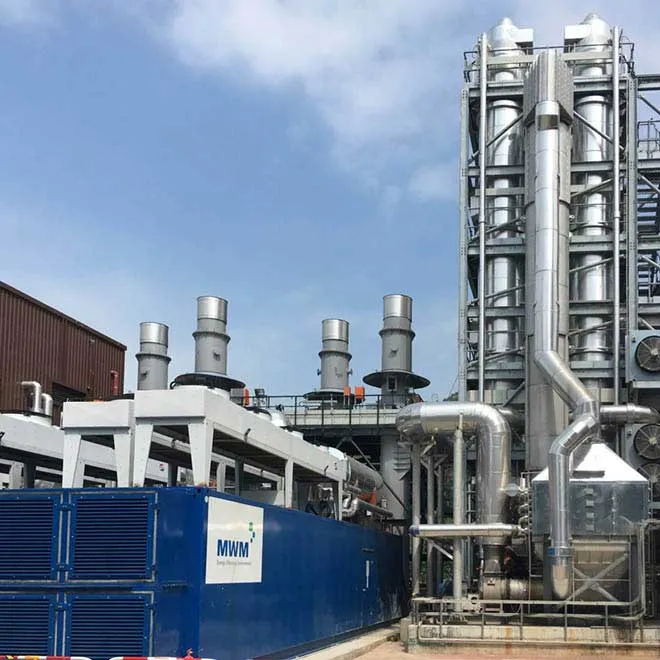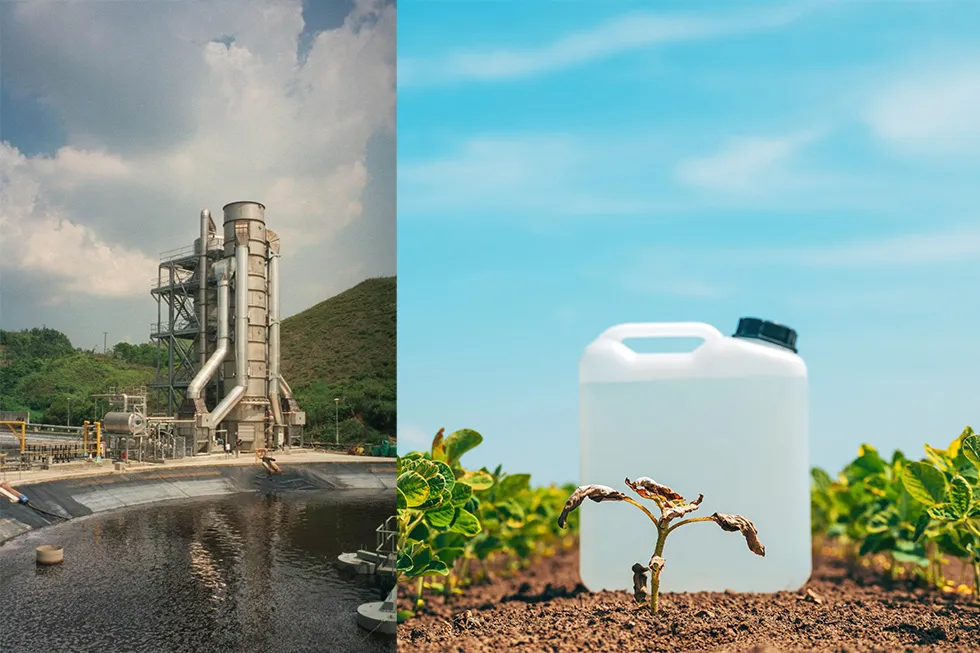
OTAR Variant 2 absorbs stripped ammonia into water instead of acid. As a result, it produces ammonium hydroxide eligible for OMRI listing. OMRI is a premium certification that commands higher market value and serves a rapidly growing global market.
Why Conventional Systems Use Acid and the Consequences
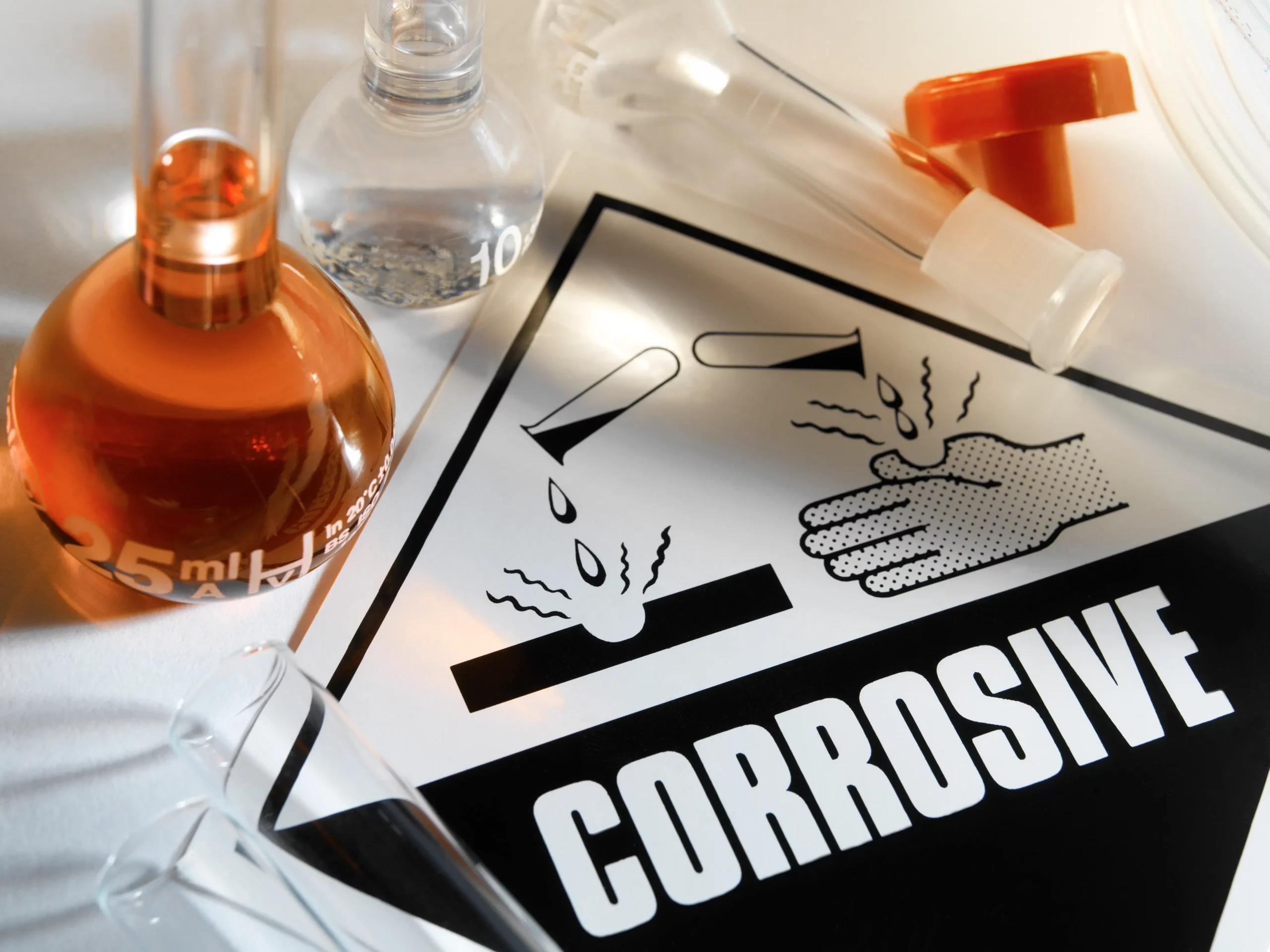
Most commercial ammonia recovery installations absorb the stripped gas into sulphuric acid to produce ammonium sulphate. However, this approach requires a continuous supply of concentrated sulphuric acid. It’s a hazardous, corrosive chemical. Consequently, it demands secondary containment, COSHH compliance and careful logistics. It generates a salt-bearing product stream and permanently converts the recovered ammonia into a sulphate form. Critically, this salt-based product is not eligible for OMRI certification, locking out the premium organic agriculture market.
What OTAR Variant 2 Does Instead
OTAR Variant 2 absorbs the ammonia gas stream into clean water, producing ammonium hydroxide (aqueous ammonia) directly. It needs no sulphuric acid and produces no ammonium sulphate salt. In addition, the process requires no acid storage, secondary containment or COSHH training for corrosive acid. The absorbed product (typically 20–25% NH₃) is clean and consistent. Where certified, it’s eligible for use in OMRI-listed organic production systems. This simplicity is both an operational advantage and a commercial one.
What OTAR Variant 2 Does Instead
OTAR Variant 2 absorbs the ammonia gas stream into clean water, producing ammonium hydroxide (aqueous ammonia) directly. It needs no sulphuric acid and produces no ammonium sulphate salt. In addition, the process requires no acid storage, secondary containment or COSHH training for corrosive acid.. The absorbed product (typically 20–25% NH₃) is clean and consistent. Where certified, it’s eligible for use in OMRI-listed organic production systems. This simplicity is both an operational advantage and a commercial one.
OMRI Certification: What It Is and Why Buyers Care
The Organic Materials Review Institute (OMRI) assesses input materials against organic production standards. Specifically, it works under the USDA National Organic Program and equivalent international schemes. OMRI listing is the recognised certification for inputs to certified organic farming systems globally. Clean water absorption qualifies ammonium hydroxide for OMRI assessment. By contrast, acid absorption disqualifies ammonium sulphate, since organic standards prohibit sulphuric acid as an input. For recovered ammonium hydroxide, OMRI certification unlocks a premium-priced, growing market segment.
Beyond Agriculture: Multiple Offtake Routes
OTAR Variant 2’s ammonium hydroxide product is not limited to agriculture.
Established industrial markets include:
- pH control and chemical manufacturing, where ammonium hydroxide is a widely used reagent
- Selective catalytic reduction (SCR) for NOx control in power generation and heavy industry
- Municipal wastewater treatment, where it supports nitrification
- Refrigeration and the emerging hydrogen carrier economy, once further concentrated to anhydrous ammonia
Multiple offtake routes from a single production system provides important commercial resilience.
The Operational Simplicity Benefit
Eliminating acid from the process has direct operational benefits beyond product quality. There is no acid procurement, no specialist storage infrastructure, no secondary containment required for acid, and no acid-specific COSHH procedures. This simplifies maintenance, improves the site safety profile and makes the system easier to operate reliably. Therefore, for facilities that previously dismissed ammonia recovery over acid-handling complexity, OTAR Variant 2 removes that barrier entirely.
The OTAR Approach
OTAR (Organics Thermal Ammonia Recovery)
OTAR is a modular platform with over 20 years of operational experience and proven installations in Asia. For operators currently spending on biological nitrogen removal, the most commercially attractive configuration is Variant 2. Which is the water absorption that converts a treatment cost into ammonium hydroxide revenue with no acid supply chain, no salt production and no hazardous chemical handling. Where waste heat is unavailable, Variant 4’s heat recycling system achieves a coefficient of performance exceeding 15, making thermal stripping viable even from cold electricity.