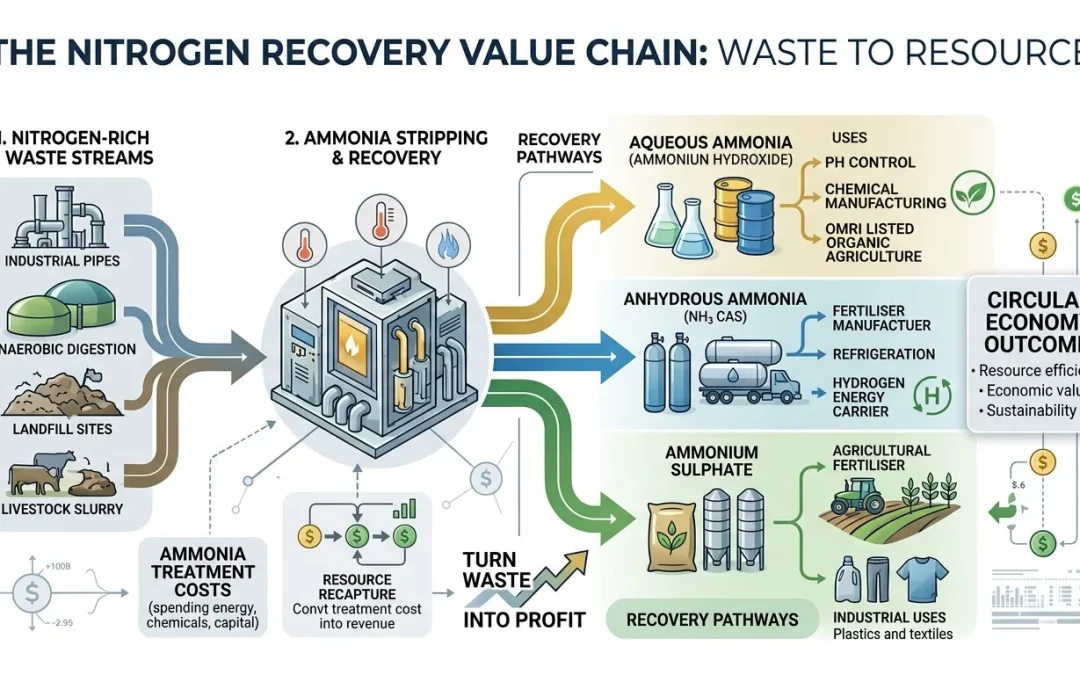
OTAR’s business case rests on three simultaneous value streams. Together, they frequently produce payback periods that compete favourably with conventional capital investment. For most operators, the investment decision comes down to three questions: what are...
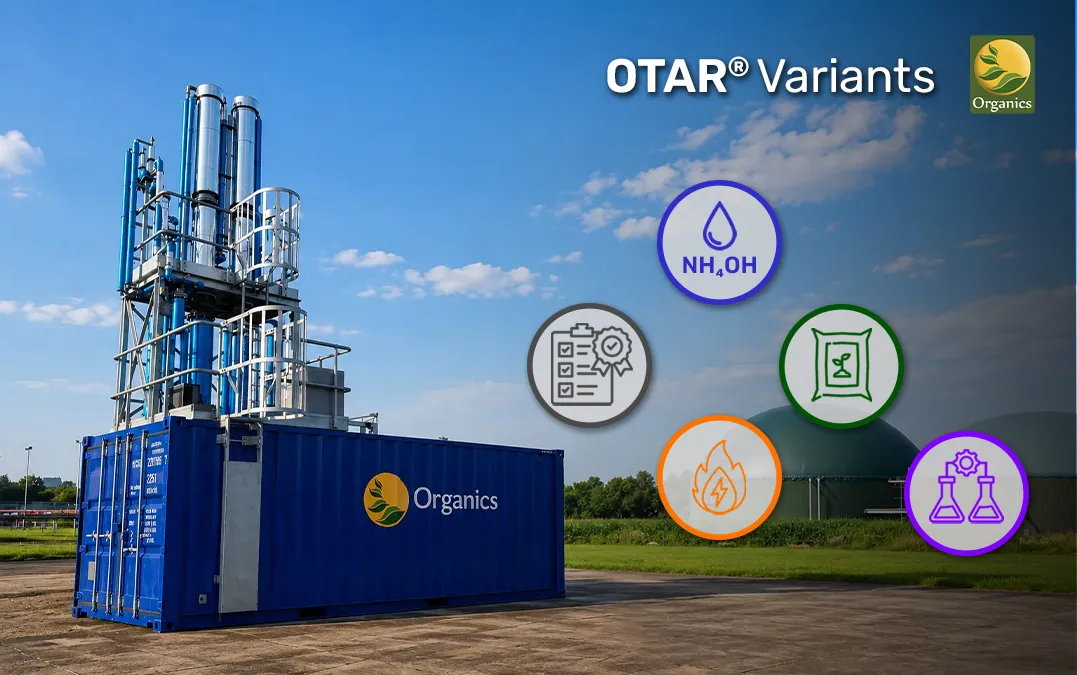
OTAR Variant 2 absorbs stripped ammonia into water instead of acid. As a result, it produces ammonium hydroxide eligible for OMRI listing. OMRI is a premium certification that commands higher market value and serves a rapidly growing global market. Most ammonia...
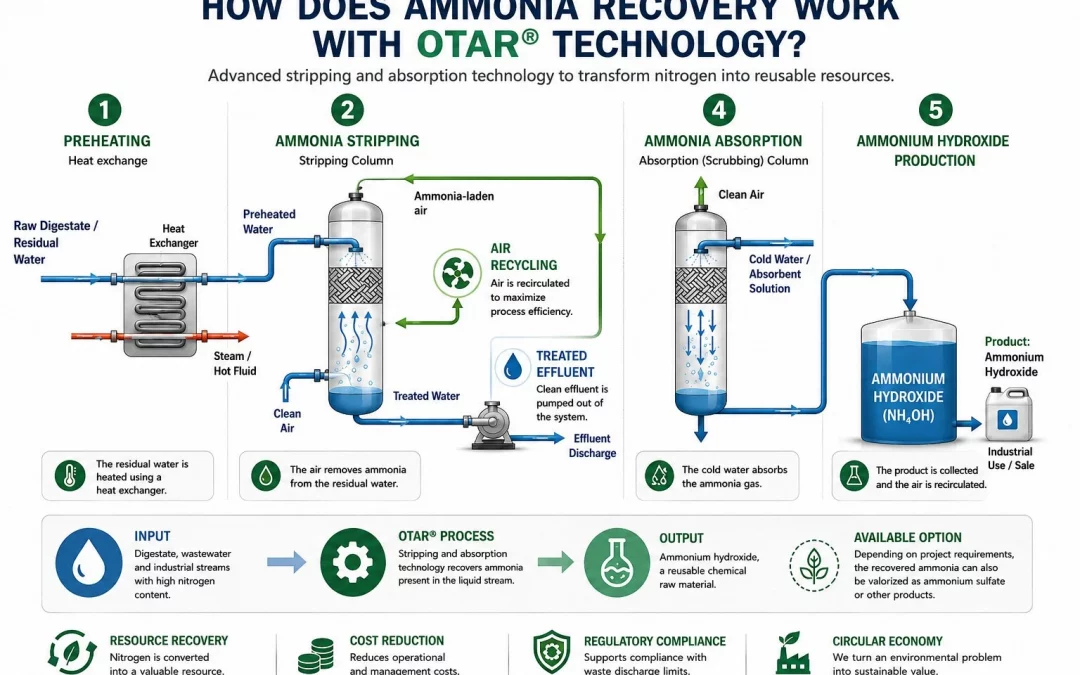
Thermal ammonia stripping is not a new concept — but OTAR’s modular integration of stripping, absorption and heat management represents a step-change in efficiency, reliability and commercial yield. The chemistry behind OTAR is elegant: shift the pH-temperature...
With over 20 years of operational experience and proven installations across Asia, OTAR’s five-variant architecture means there is a configuration for every site, regardless of waste heat availability, ammonia load or product market access Understanding OTAR...
Most facilities know exactly what it costs to treat ammonia. However, few have calculated how much value leaves their site daily. Where Does Ammonia Come From in Waste Streams? Ammoniacal nitrogen is present in a wide range of industrial and agricultural streams. The...
For every tonne of ammonia destroyed by biological removal, operators waste energy, chemicals, and capital. They also discard a valuable fertilizer nutrient worth hundreds of pounds per tonne. What Is Biological Nitrogen Removal? Biological nitrogen removal (BNR) is...