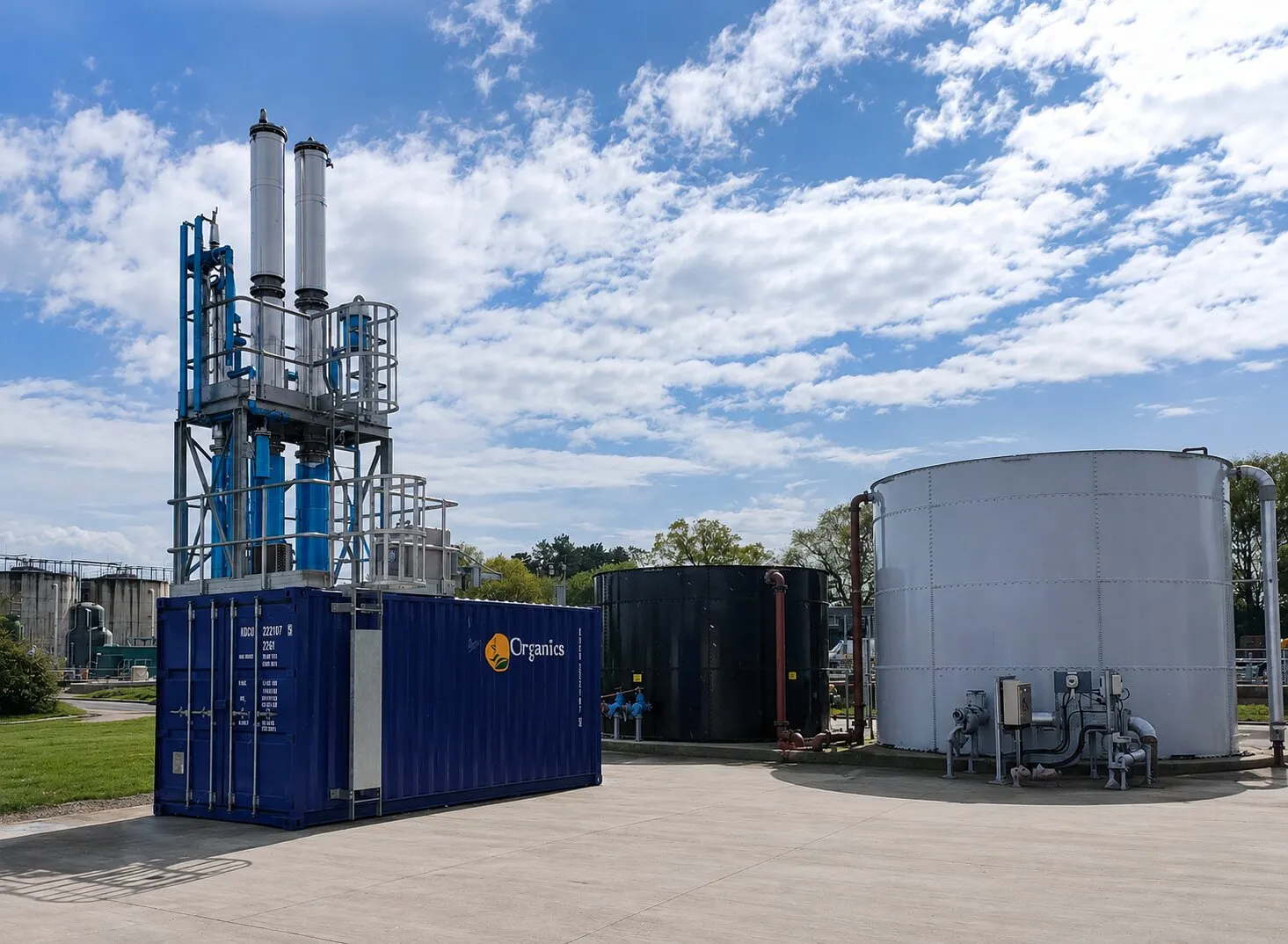
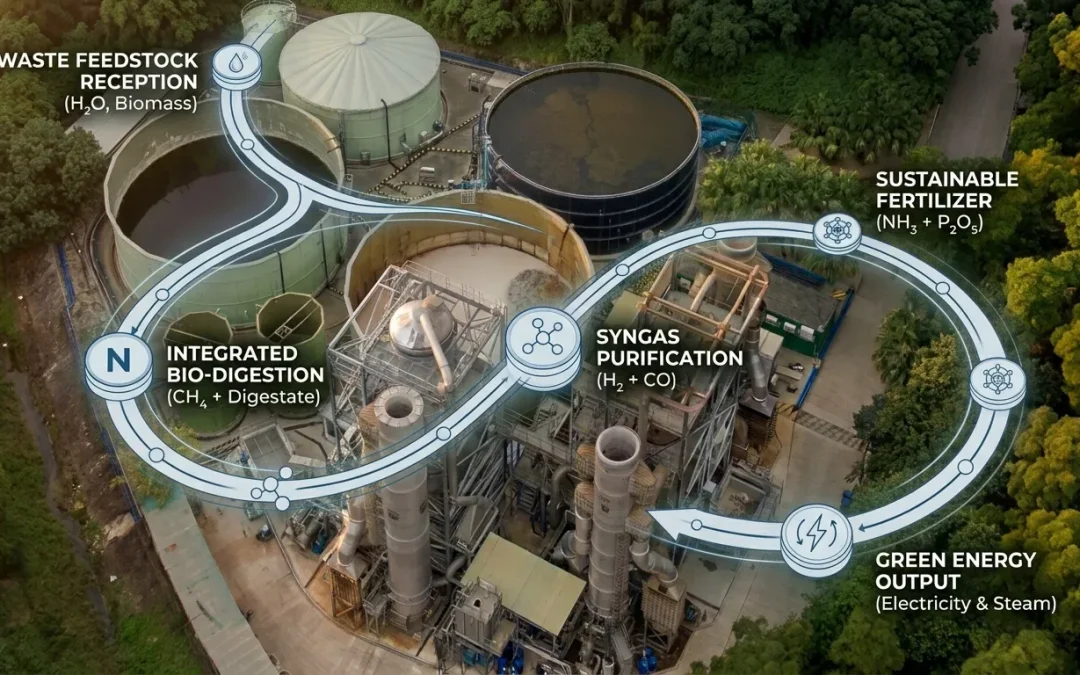
The fertiliser industry consumes approximately 200 million tonnes of nitrogen every year, almost all of it fixed from atmospheric nitrogen using enormous quantities of fossil energy. Meanwhile, waste streams around the world discharge reactive nitrogen to rivers, groundwater and the atmosphere. OTAR sits at the intersection of these two facts.
The circular economy is well understood in the context of materials and plastics. Its application to nitrogen — one of the planet’s most critical and most wasted resources — is less familiar but arguably more consequential.
The Nitrogen Problem at Scale
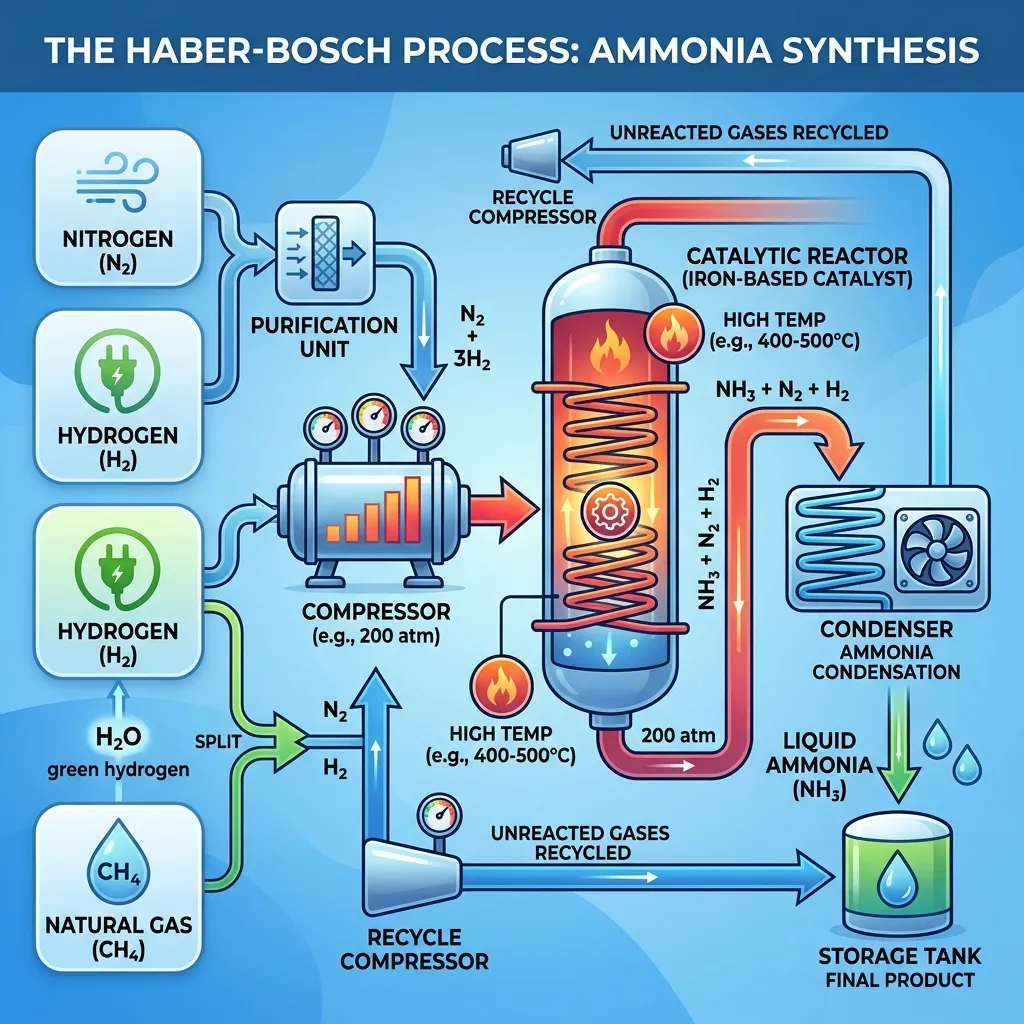
The Haber-Bosch process fixes atmospheric nitrogen into reactive ammonia for fertiliser production. It consumes approximately 1–2% of the world’s annual energy supply and accounts for around 1.4% of global CO₂ emissions. Despite this investment, much of the nitrogen fixed by Haber-Bosch is lost before it delivers its intended benefit: leached into waterways causing eutrophication, volatilised to atmosphere contributing to indirect greenhouse gas emissions through nitrous oxide formation, or discharged in waste streams as a compliance problem.
What OTAR Does for the Nitrogen Cycle
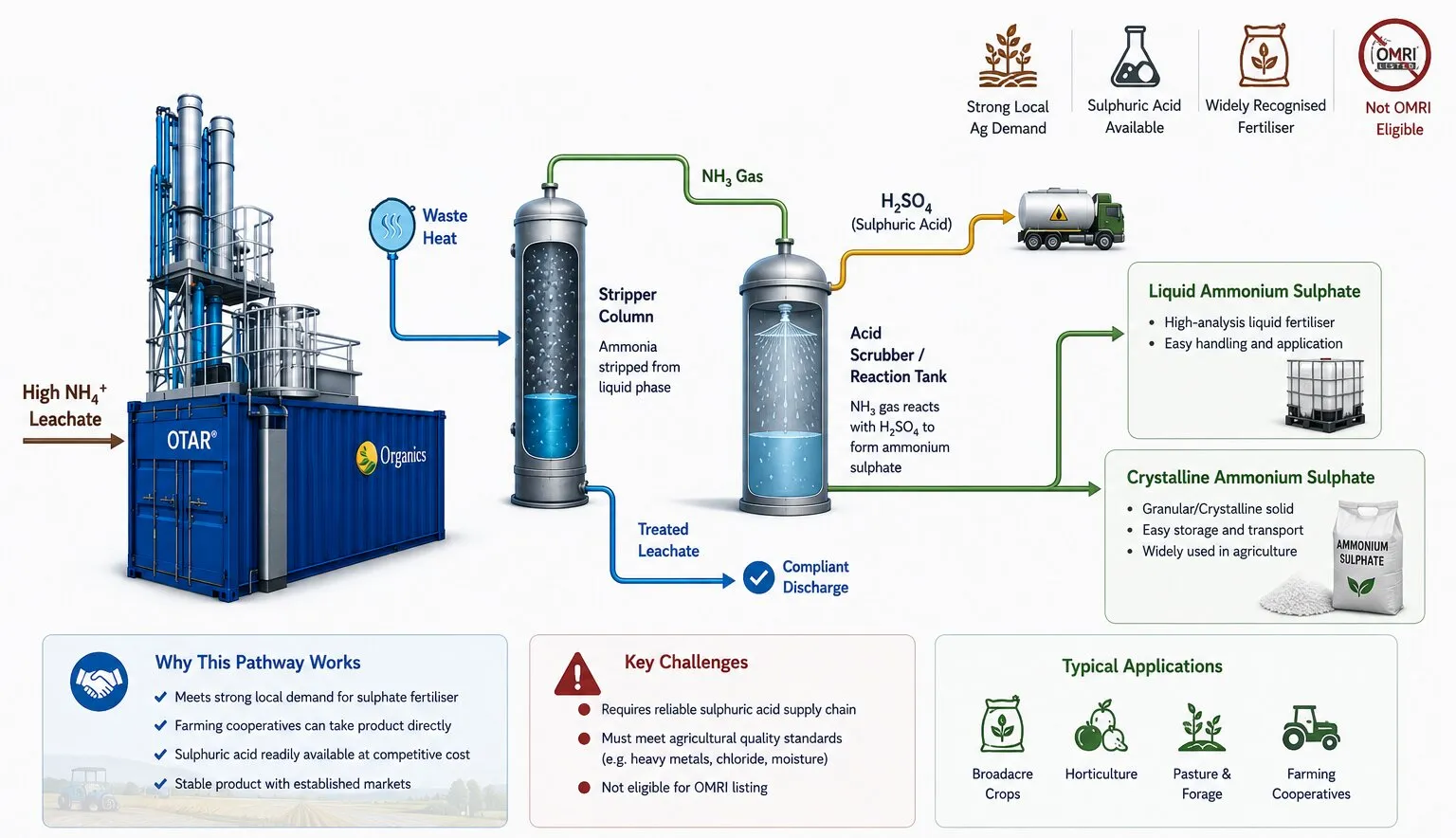
OTAR intercepts reactive nitrogen at the point of concentration — in digestate, wastewater, leachate or industrial effluent — and returns it to productive use as ammonium hydroxide, anhydrous ammonia or, in Variant 3, ammonium sulphate. This closes a loop that is currently open: rather than fixing new nitrogen from the atmosphere (at Haber-Bosch energy cost), OTAR captures nitrogen that has already been fixed and would otherwise be lost. The environmental arithmetic is compelling: every tonne of nitrogen recovered by OTAR displaces approximately 2 tonnes of CO₂ equivalent from avoided Haber-Bosch synthesis.
Regulatory and Policy Tailwinds
The UK’s Environment Act 2021 sets targets for reducing nitrogen pollution in sensitive catchments. Nutrient Neutrality policy is already reshaping planning decisions across multiple river catchments. The EU’s revised Urban Wastewater Treatment Directive is strengthening nitrogen discharge requirements across Europe. Farm to Fork and the Zero Pollution Action Plan drive explicit commitments to recovered nutrient use. OTAR’s operators are positioned ahead of these trends — their investment in nitrogen recovery today will be a regulatory expectation in many jurisdictions by 2030.
The Hydrogen Economy Dimension
Ammonia is increasingly recognised as a scalable carrier for renewable hydrogen — its high energy density and existing global transport infrastructure make it a leading candidate for zero-carbon maritime fuel and industrial energy storage. OTAR Variant 2 can produce anhydrous ammonia (by concentration of recovered ammonium hydroxide) that feeds directly into this emerging value chain. For facilities that invest in OTAR today as a wastewater treatment solution, the option to supply the hydrogen economy in the future is a genuine strategic asset.