Howdon WwTW, Northumbrian Water, UK — OTAR® Municipal Pilot Case Study
| Location | Howdon Sewage Treatment Works, North Tyneside, United Kingdom |
| Client | Northumbrian Water |
| Technology | Variant 2 — Waste Heat to Recover Ammonium Hydroxide |
| Funding | Ofwat Innovation in Water Challenge (2021) |
| Consortium |
Northumbrian Water (lead), Organics Group, Anglian Water Services, Cranfield University, Warwick University, Wood Group UK Ltd |
The Challenge
Northumbrian Water needed to confirm whether thermal ammonia recovery, already proven at commercial landfill and industrial sites, could translate directly to municipal sidestream treatment — specifically centrate from thermal hydrolysis (THP) at Howdon Wastewater Treatment Works. Conventional biological ammonia removal converts ammonia to harmless nitrogen but wastes its underlying chemical value and produces nitrous oxide, a potent greenhouse gas, as a by-product.
The Solution
Northumbrian Water led the Organics Ammonia Recovery project in partnership with Organics Group, Anglian Water Services, Cranfield University, Warwick University, and Wood Group UK Ltd, after winning £225,000 in funding from Ofwat’s first-ever Innovation in Water Challenge in 2021.
The pilot thermal ammonia recovery facility — an OTAR® Variant 2 system — was purpose-built at Organics Group’s factory in Thailand, shipped to the UK, and installed on site at Howdon. Once commissioned, the facility strips and recovers ammonia from wastewater using heat rather than biological treatment, producing a stable ammonium hydroxide product rather than destroying the ammonia as inert nitrogen gas. The project was reported complete in December 2023.
Technical specifications
| Ammonia removal efficiency | Two figures are publicly documented: approx. 90% overall at low feed concentration (Organics Group engineering data), and 95% recovery of a high-strength ammonia product (Northumbrian Water public reporting). Figures likely reflect different measurement conditions rather than a discrepancy in performance. |
| Energy input | 12 kWh thermal + 2 kWh electrical per kg ammonia removed |
| Product | 10-20% ammonium hydroxide — stable and storable |
| System integration | Pairs directly with CAMBI-type thermal hydrolysis and AD digestate streams |
| Facility origin | Purpose-built at Organics Group's factory in Thailand; installed on site at Howdon in 2023 |
| Track record | Pilot reported complete, December 2023 (Ofwat Innovation Fund) |
Want to know how OTAR® works?
See the full technology explainer, five-variant breakdown, and cost comparison on the OTAR® technology page.
Why this project matters
- Confirmed by Northumbrian Water and independent press as the first time a water company has recovered commercial-quality ammonia from wastewater using a thermal technique
- Backed by a multi-partner consortium spanning two water companies and three universities, not a single-vendor trial
- No chemical pH adjustment required, and no impact on COD or downstream biological processes
- Recovered ammonia has documented potential uses in fertiliser and pharmaceutical production, and as a precursor for green hydrogen fuel for buses, HGVs, and trains
- A related Severn Trent Water project (STW Living Lab, REWAISE) further explored hydrogen recovery from waste ammonia on the same OTAR® platform
This project builds constructively on 25 years of extensive experience that Organics has with ammonia recovery systems. The technology is designed to provide water companies with a cost-effective alternative to conventional denitrification systems, and will generate opportunities, not only for ammonia-based products but also for enhanced decarbonisation of the global water sector.
To be the first, not just in the water industry, but in the world, to use this bespoke technology is incredible and testament to our commitment to improve the environment and drive us even further on the road towards net zero
Project Gallery
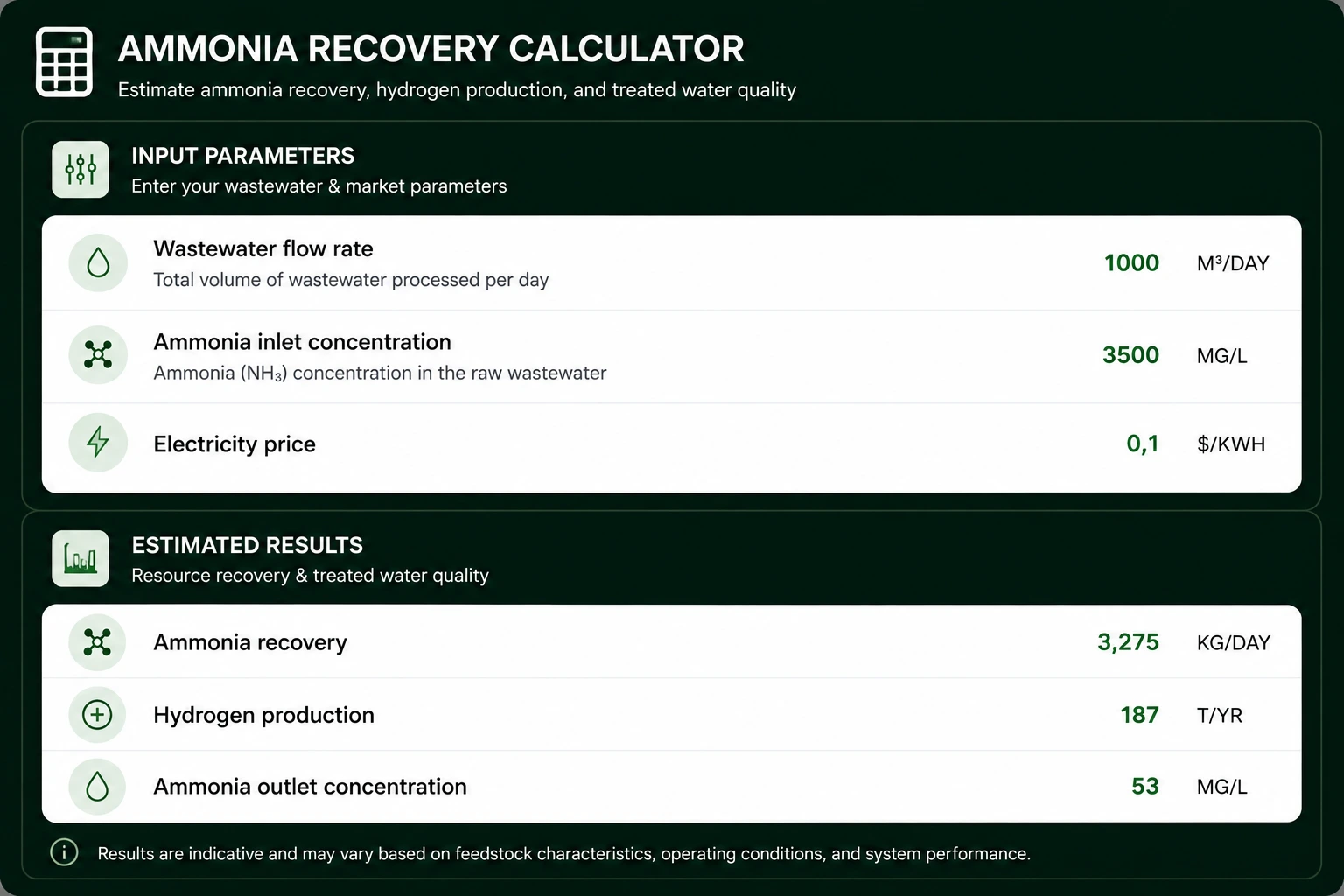
What More Could Your Wastewater Deliver?
Evaluate the potential to recover ammonia and produce hydrogen while understanding the energy requirements and economics of your wastewater treatment process.
Free • Preliminary Estimate • No Commitment