O·Park1 Organic Waste Facility, Hong Kong — OTAR® Case Study
| Location | Siu Ho Wan, North Lantau, Hong Kong |
| Client | OSCAR Bioenergy JV, commissioned by Hong Kong’s Environmental Protection Department (EPD) |
| Technology | Variant 1 — Waste Heat with Thermal Destruction |
About the facility
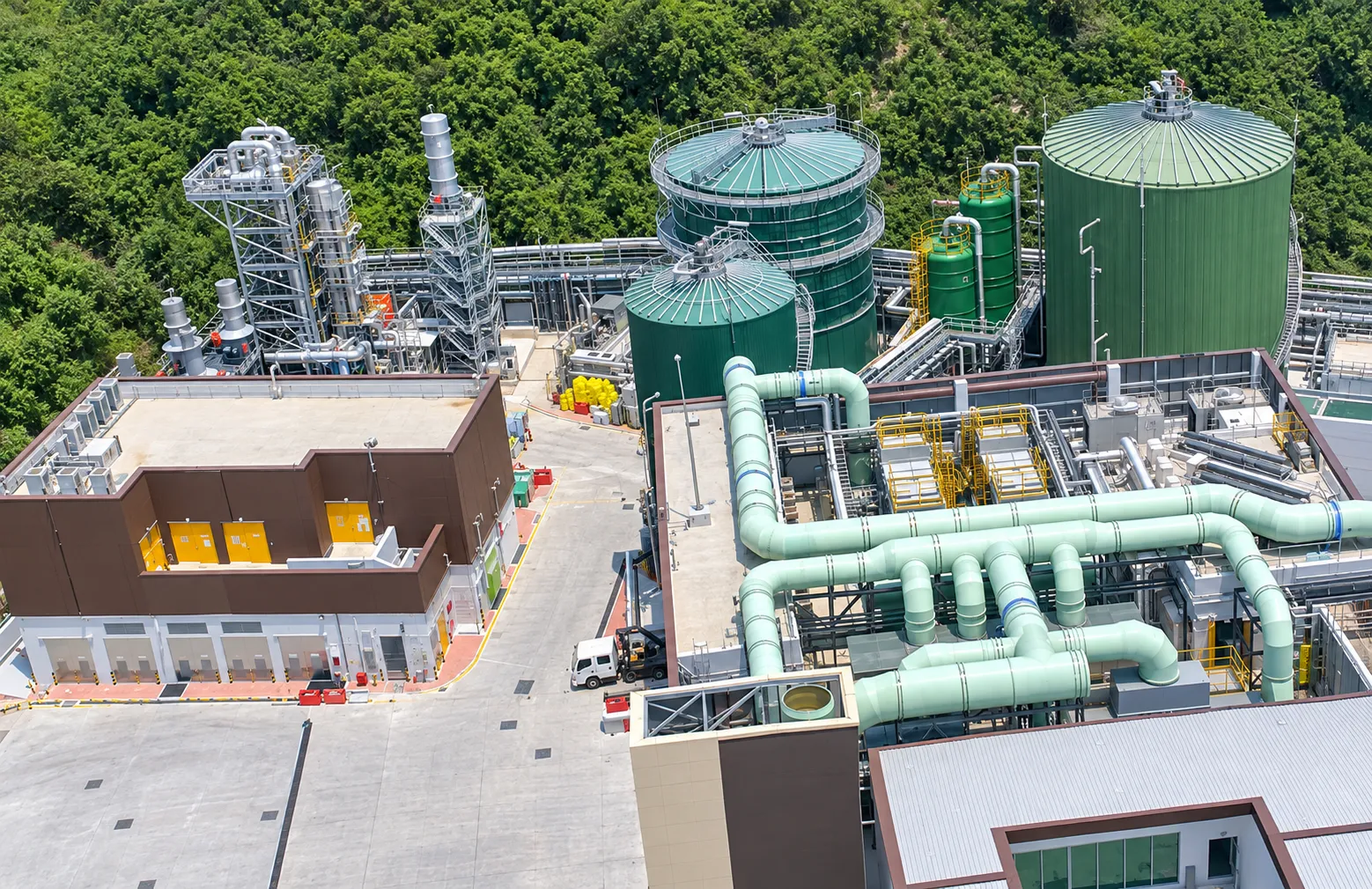
O·Park1 is Hong Kong’s first Organic Resources Recovery Centre (ORRC), commissioned by the Environmental Protection Department and operational since July 2018. Located at Siu Ho Wan on North Lantau, it uses anaerobic digestion to convert source-separated food waste into biogas for electricity generation, with the digestate residue processed into compost for landscaping and agricultural use.
The facility treats up to 200 tonnes of food waste per day, generates an estimated 14 million kWh of surplus electricity annually — enough to power around 3,000 households — and is estimated to reduce greenhouse gas emissions by approximately 25,000 tonnes per year. It is one of the largest facilities of its kind in Asia.
Visit the official O·Park1 site for public tour information and facility details.
The Challenge
Anaerobic digestion of food waste produces process liquor with ammonia concentrations of 3,000-5,000 mg/L NH4-N. At this concentration, ammonia is toxic to the methane-producing bacteria that drive the digestion process itself, and left untreated it risks destabilising biogas production — the core output the entire facility depends on for its electricity generation. As Hong Kong’s first facility of this kind, O·Park1 needed a treatment approach proven to protect anaerobic digestion reliably at full commercial scale, not just in trials.
The Solution
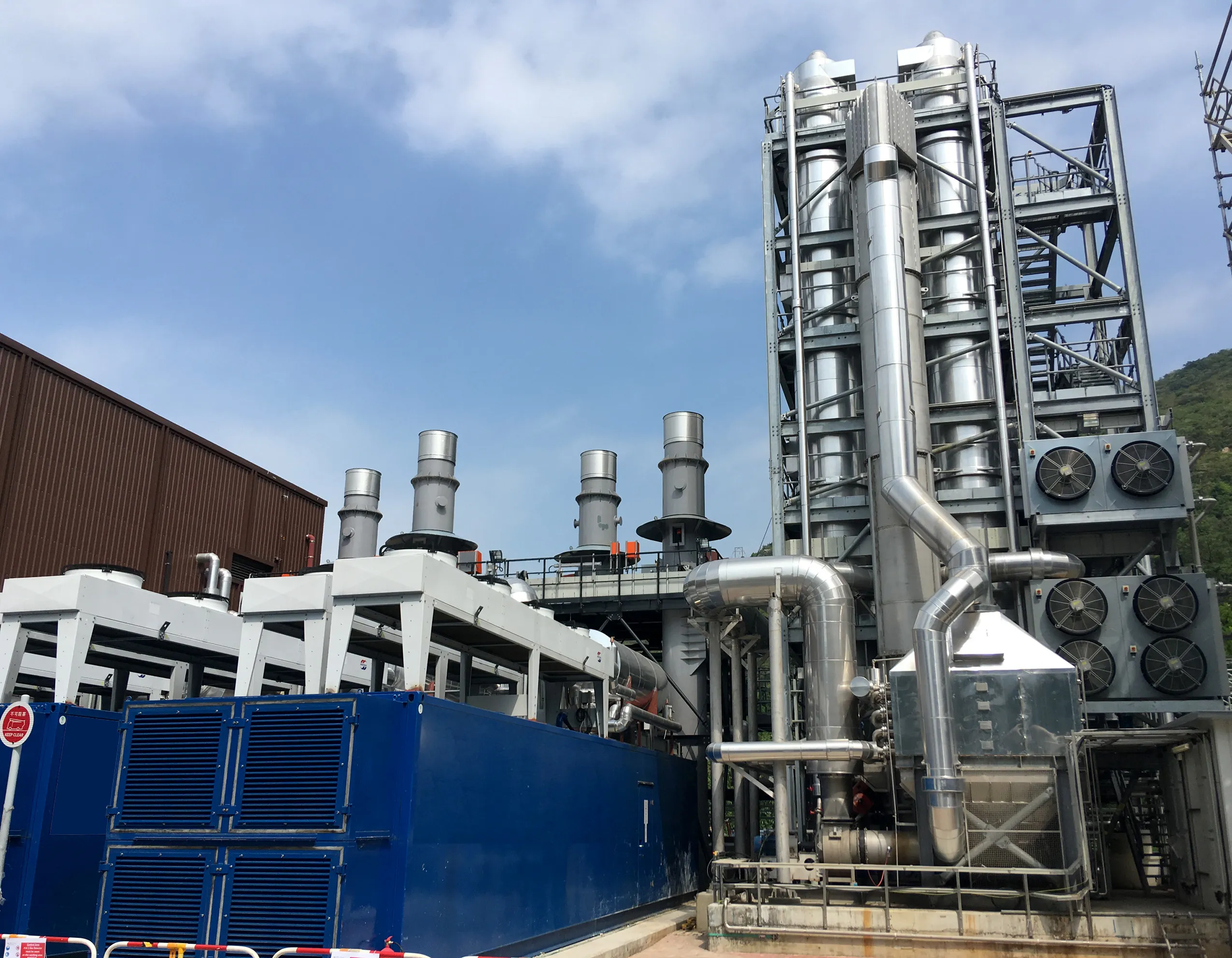
Organics Group installed an OTAR® Variant 1 thermal ammonia stripping and destruction system, fuelled by approximately 285 Nm3/hr of landfill gas, to treat the digester’s process liquor before ammonia levels could inhibit digestion. Because OTAR® is a non-biological, thermally driven process, it operates independently of the digester’s own biological conditions, removing ammonia without introducing chemical dosing or risking cross-contamination of the digestion process.
Technical specifications
| Process liquor flow | 550 m3/day |
| Influent ammonia | 3,000 - 5,000 mg/L NH4-N |
| Fuel source | Landfill gas — approx. 285 Nm3/hr |
| Application | Anaerobic digester effluent treatment for a large-scale organic waste-to-energy facility |
| Facility capacity | 200 tonnes of food waste treated per day |
| Facility output | Approx. 14 million kWh surplus electricity annually; approx. 25,000 tonnes CO2e emissions avoided per year |
| Facility status | Hong Kong's first Organic Resources Recovery Centre (ORRC); operational since July 2018 |
Notable: A directly relevant reference for AD plant operators evaluating ammonia inhibition risk.
Want to know how OTAR® works?
See the full technology explainer, five-variant breakdown, and cost comparison on the OTAR® technology page.
Why this project matters
- Demonstrates OTAR®’s role in protecting anaerobic digestion assets and preserving biogas yield, not just end-of-pipe compliance
- A directly relevant reference for AD plant operators anywhere evaluating ammonia inhibition risk in their digesters
- Installed at Hong Kong’s first and one of Asia’s largest organic waste-to-energy facilities, commissioned by a government environmental authority
- Shows OTAR®’s compatibility with government-scale infrastructure projects, not only private industrial or landfill sites
Project Gallery
What More Could Your Wastewater Deliver?
Evaluate the potential to recover ammonia and produce hydrogen while understanding the energy requirements and economics of your wastewater treatment process.
Free • Preliminary Estimate • No Commitment